
Barefoot shoes are going mainstream
A win or a challenge for small brands?
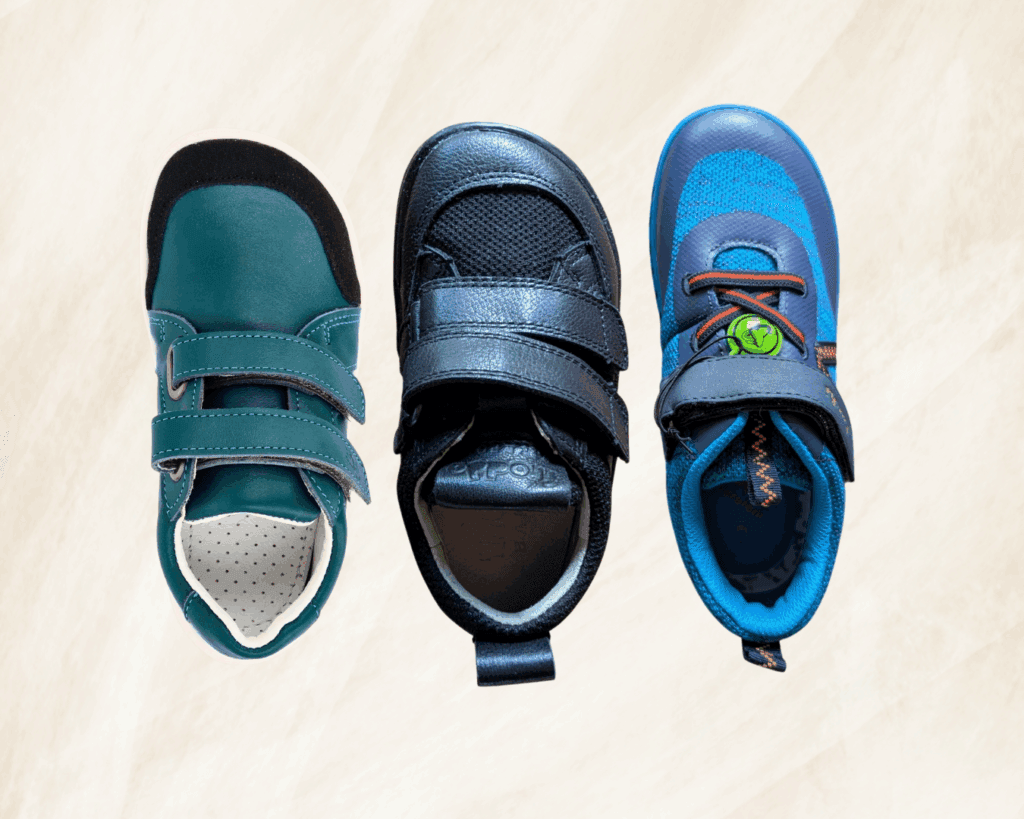
Just a few years ago, finding shoes with enough room for the toes, a flexible sole and a shape that followed the natural outline of the foot was far from straightforward.
Many smaller barefoot brands had to explain not only to customers, but often to manufacturers themselves, why they needed different lasts, a different construction or a different type of outsole. At the same time, they showed that a functional shoe did not have to be narrow, stiff or heavily reinforced.
Today, things are changing. Features once associated mainly with barefoot footwear are increasingly appearing in familiar brands sold in everyday shoe shops. Wider toe boxes, lighter construction and more flexible soles are finding their way into the mainstream.
For customers, more choice and better availability are good news. Pricing, however, is less straightforward. Some mainstream models are considerably cheaper, while others are priced close to specialist barefoot shoes. Where a shoe is made does not, on its own, tell us what it will cost or how well it is made.
And this is where things get interesting.
What does this mean for the brands that helped build the barefoot market?
Creating a barefoot shoe involves more than simply deciding to widen the toe box. Development can include custom lasts and outsoles, finding suitable materials, making prototypes, testing and exploring solutions that ultimately do not work out.
Not every model succeeds on the first attempt, and not every prototype reaches production. Yet someone still has to cover those costs. For smaller manufacturers with limited budgets and short production runs, they can be a considerable burden.
Many specialist brands also helped explain why it can make sense to give feet more space and freedom to move naturally, rather than expecting shoes to hold and support them firmly in every situation.
They were not just making shoes. They were helping to change our understanding of what footwear could look like and how it could work.
Brands such as Softstar, Vivobarefoot, Vibram FiveFingers, Feelmax, Xero Shoes, Freet and Joe Nimble all have a place in the history of modern minimalist footwear. Their stories differ, however: some started with minimalist shoes, while others developed a new range or direction within an existing business.
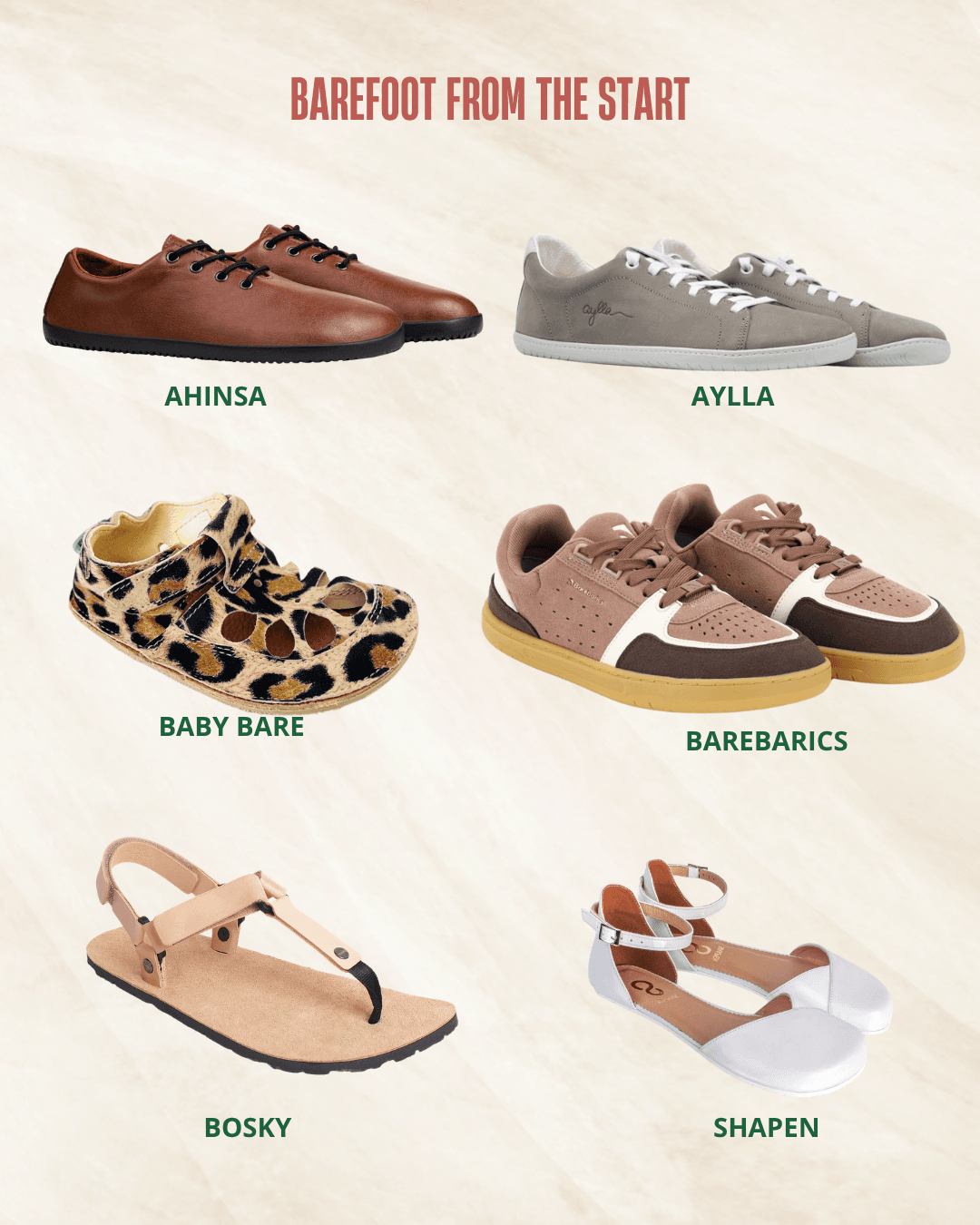
The wider range of footwear has also been shaped by brands such as Ahinsa, Wildling, Baby Bare, SHAPEN, Be Lenka, Peerko, Aylla, Saguaro, Splay, PaperKrane, Magical Shoes, Zeazoo, Mukishoes, Sole Runner, Lems and Tadeevo. Minimalist sandals are represented by brands including Luna Sandals, Unshoes, Bedrock and Shamma. Urban trainers from brands such as Barebarics bring another dimension to the barefoot offering.
These are examples of different paths into the market, not a complete list or a chronological ranking. Specialist brands also differ in their shoe shapes, sole thicknesses and approaches to construction.
Traditional manufacturers that have added barefoot footwear
Not every company was new to shoemaking when it entered the barefoot market.
Some already had experience with conventional footwear, established suppliers, production processes and, in some cases, their own manufacturing facilities. They responded to changing customer needs by gradually expanding their ranges.
Alongside conventional shoes, they began offering barefoot collections, different widths or so-called compromise models. These combine certain barefoot features with conventional construction, such as more room for the toes paired with a thicker sole.
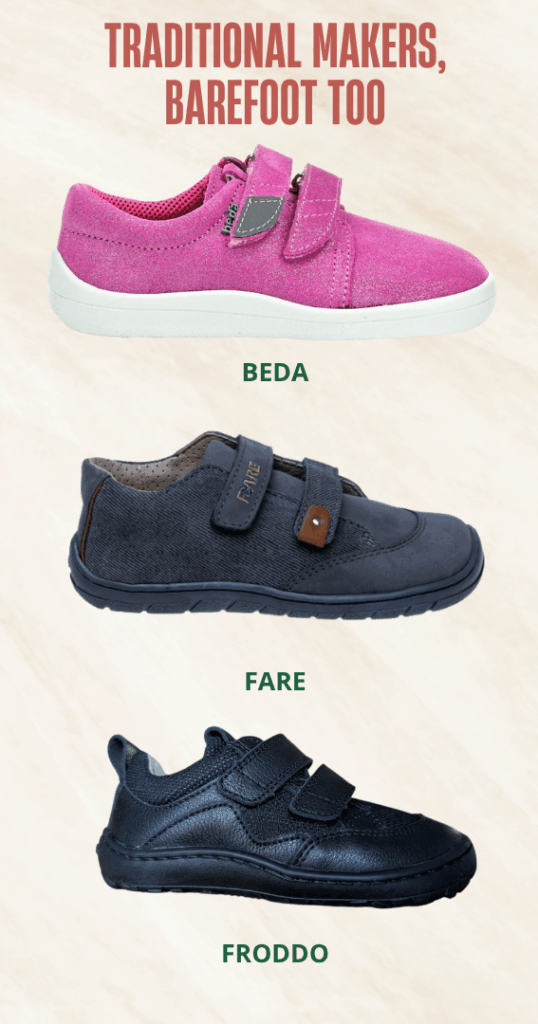
Examples include Bundgaard, FARE, Froddo, Beda, Jonap, Protetika, Bisgaard, Koel, D.D.Step and Merrell with its minimalist range.
The transition has not been the same for every brand. Some introduced a separate collection, while others gradually shifted more of their focus towards barefoot footwear.
This shows that traditional shoemaking experience and a barefoot approach can work together. What matters is how they come together in the actual product.
Barefoot features in the wider mainstream
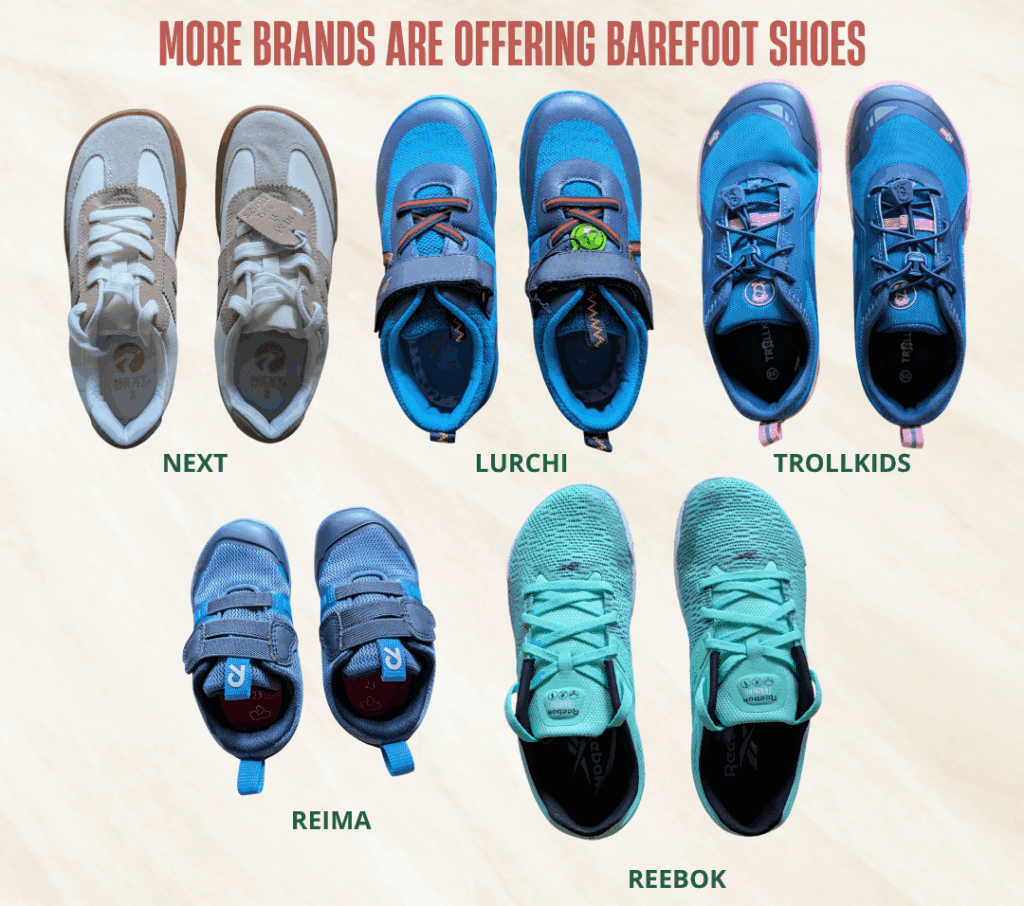
Another group consists of brands that customers mainly know through everyday fashion, sport or outdoor clothing and equipment. Their ranges now also include barefoot shoes or models with a more foot-shaped design. Examples include Next, Reebok, Reima, Lurchi, Trollkids, H&M and Decathlon, with more brands gradually joining them.
This does not mean that they all entered the market at the same time or that their models share the same features. The boundary between a traditional manufacturer and a mainstream brand is also fluid. These categories describe different routes into the market, not a ranking of quality.
Large companies may benefit from higher production volumes, wider distribution networks and stronger bargaining power. Something that is expensive or difficult for a small brand to access may therefore be easier for them to achieve.
Manufacturing possibilities have changed too
Some barefoot brands started with local manufacturers or in their own workshops. Others looked for suitable partners abroad. Finding someone willing to work with an unfamiliar last or develop a different construction was not always easy.
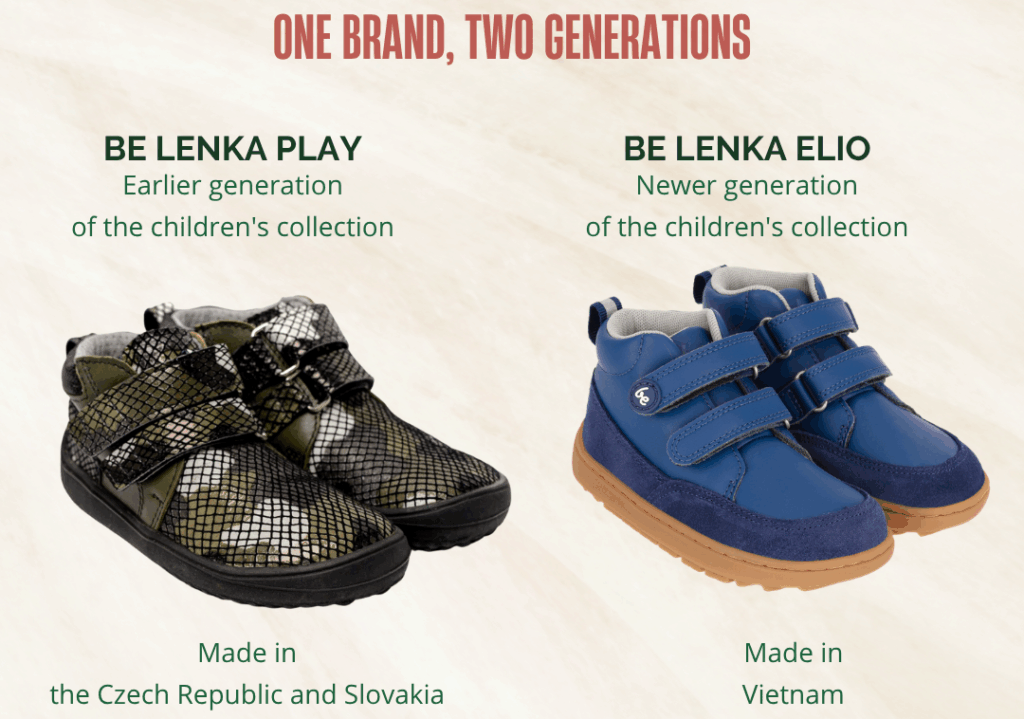
Today, barefoot shoes are made in different parts of the world. Portugal and Spain, for example, are important production locations for European brands thanks to their established footwear industries. Shoes are also made in Asian factories, including large facilities with extensive capacity and access to technical materials.
What a particular factory can do depends on its equipment, experience, suppliers and the requirements set by the brand commissioning the shoes. The distinction between European and Asian production alone is not enough to judge quality, working conditions or material testing.
One question remains worth asking: has barefoot footwear become easier to manufacture partly because earlier manufacturers and developers had already done some of the groundwork?
Is this a success for the barefoot movement?
In some ways, yes.
When more shoes give toes room and better accommodate the shape of the foot, ideas once associated with a small market segment reach a wider audience.
Specialist brands, their customers and people who raise awareness may have contributed significantly to this change. It is difficult to say exactly how much each has contributed, but a more natural shoe shape clearly no longer has to remain a niche idea.
For customers, who came first is not necessarily the most important question. What matters is whether a particular shoe meets their needs.
More choice brings pressure on prices
For smaller manufacturers, a growing range of options can also create challenges.
A brand producing small batches may have different costs per pair from a company placing large orders. However, materials, development, transport, distribution, marketing and margins also influence the final price.
Customers may find a specialist barefoot shoe alongside a visually similar model from a large brand that costs considerably less. As a purely illustrative example, the difference might be 20, 30 or 50 per cent. This is not a general comparison of market prices: with other models, the gap may be smaller, non-existent or reversed.
The question is still understandable: why should I pay more?
What are customers actually paying extra for?
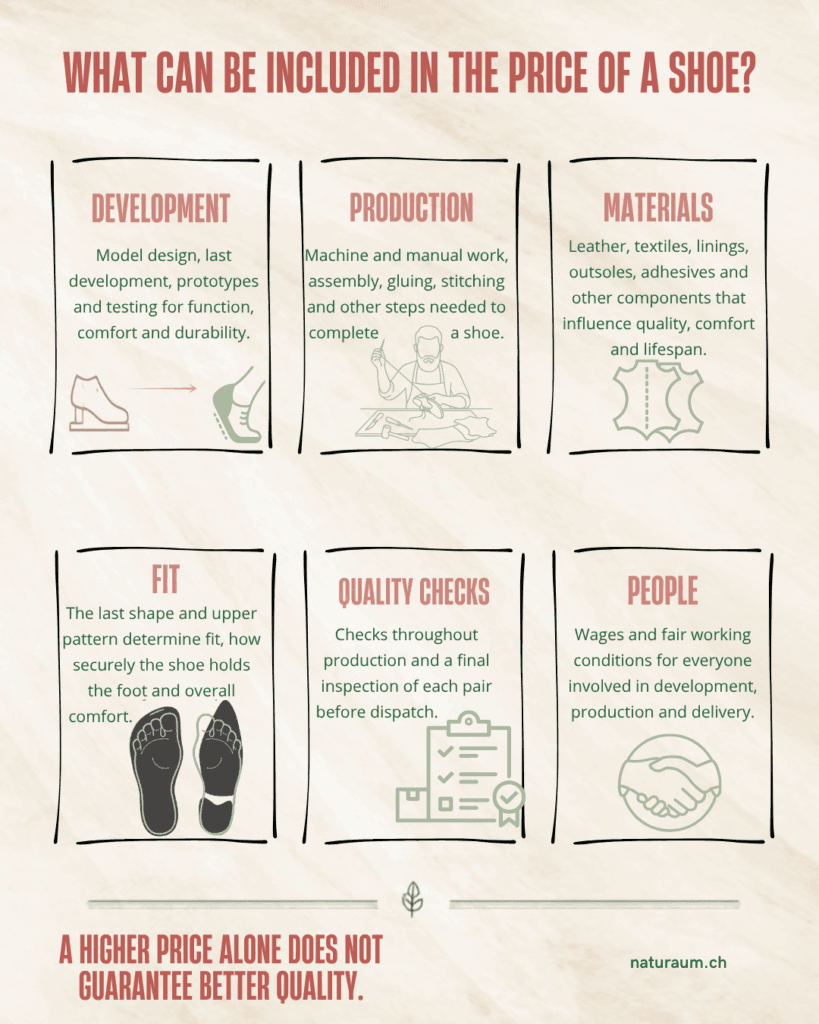
A higher price may be associated with:
- developing custom lasts and outsoles,
- smaller production runs,
- selecting and testing materials,
- carefully developed patterns for particular foot shapes,
- offering different widths,
- production checks and traceable components,
- customer service and expert advice,
- staffing, development and business running costs.
None of these can be assumed from the price or the size of the brand alone. A more expensive shoe is not automatically better quality, and a cheaper one is not automatically worse.
Manufacturers and retailers will therefore increasingly need to explain clearly what gives a particular model its value. Not simply claim that it is better, but explain why and for whom.
A wider shoe is not necessarily a barefoot shoe
Toe box width is important, but it is only one part of a shoe’s construction.
A shoe can offer plenty of room for the toes and still have:
- a stiff or relatively inflexible sole,
- a significant height difference between the heel and forefoot, known as heel-to-toe drop,
- substantial cushioning,
- an insole with pronounced arch support or a raised heel,
- rigid reinforcements that restrict movement.
This does not automatically make it a bad shoe. It means that a wide shoe and a barefoot shoe are not the same thing.
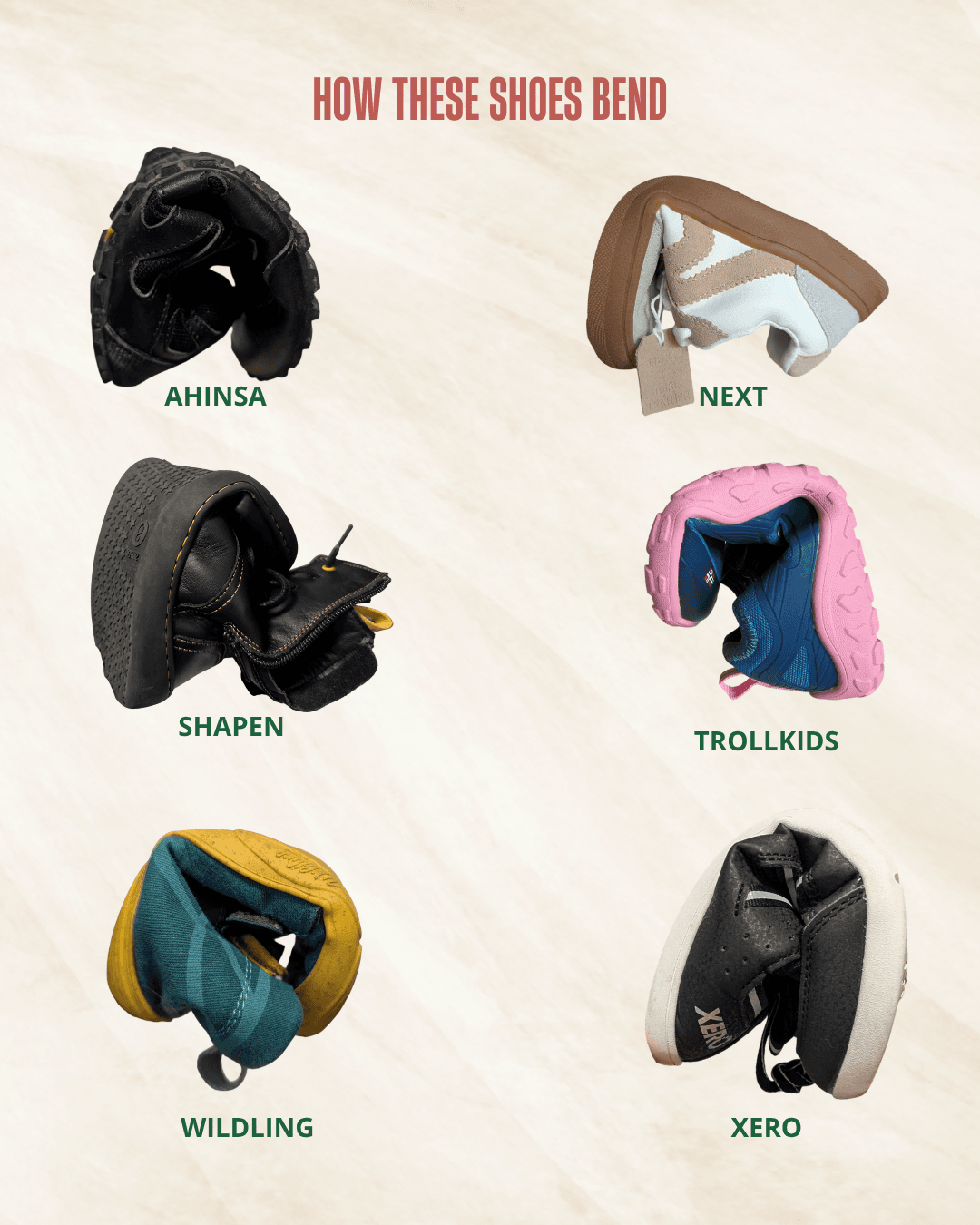
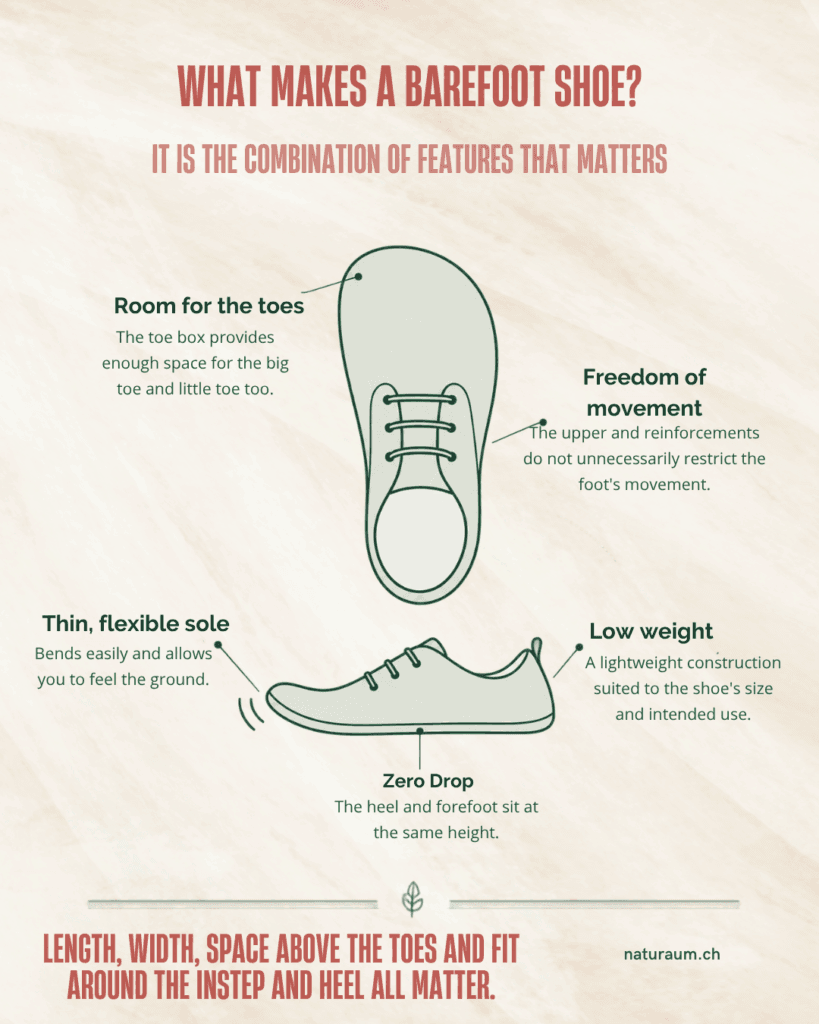
In barefoot footwear, we generally look for a combination of toe room, zero drop, a flexible and relatively thin sole, and a construction that allows the foot to move. Weight can also matter. Bending a shoe by hand shows that it can bend, but not how much force this requires or how it will behave when walking.
The label “barefoot” does not replace an assessment of the individual model. Nor can the actual heel-to-toe drop always be judged reliably from a side view: the outer edge of the sole may not reflect the position of the foot inside the shoe.
Ultimately, it also comes down to the foot itself. Even a shoe with the usual barefoot features will not fit everyone. Length, width, toe shape, instep, heel fit and intended use all matter.
What role will specialist brands play in the future?
In a few years, a wider toe box may no longer be unusual. A more natural shape could become a more familiar feature of modern footwear.
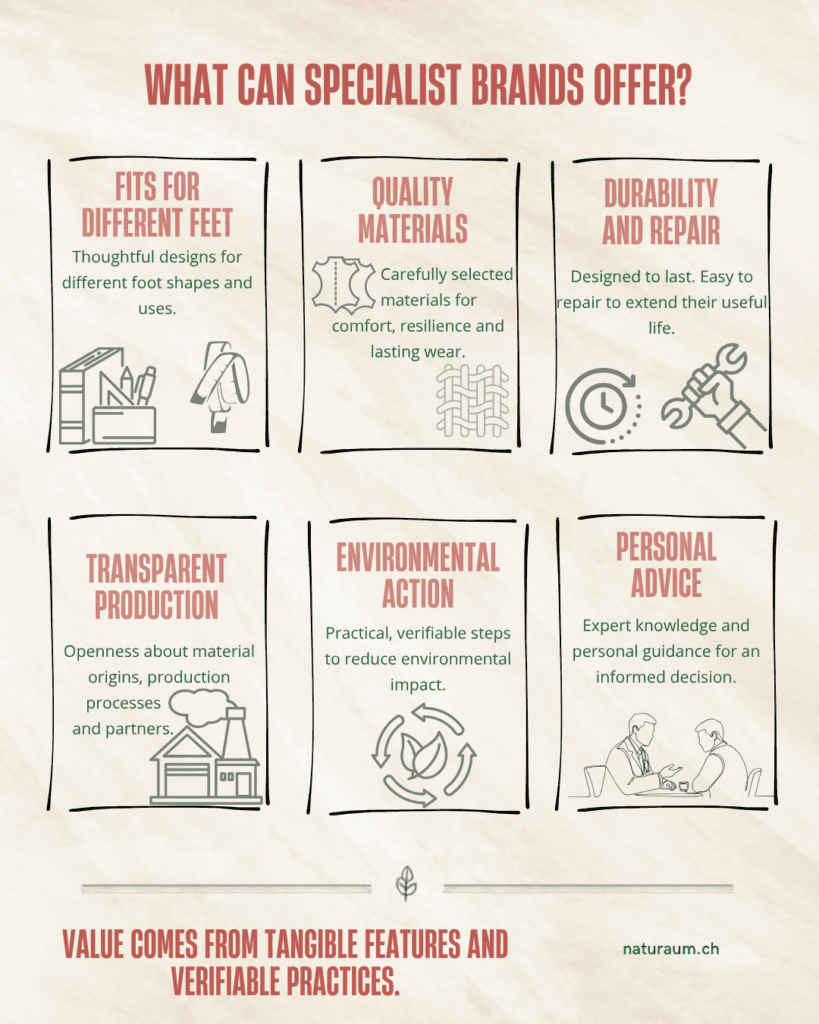
Specialist brands will then need to demonstrate their value through more than toe room alone. Important factors may include:
- different fits for different foot shapes,
- workmanship and suitable materials,
- durability and repairability,
- transparent production and verifiable working conditions,
- practical steps to reduce environmental impact,
- experience in product development,
- expert, personal advice.
For some customers, European or local production will also matter. However, this alone does not replace the other considerations.
A win or a challenge? Perhaps both
If we reach a point where the natural shape of the foot is routinely considered in shoe design, that will be a major step forward. It does not mean that every shoe will become a barefoot shoe. But for many people, it could become easier to find footwear that offers enough space and fits well.
It would be a shame, though, if the brands that helped bring about this change over many years were to disappear in the process.
For customers, more choice is good news. At the same time, it is worth remembering those who helped pave the way that others are now following. The growth of barefoot footwear also reflects years of development, experimentation and a search for solutions that were not always straightforward or successful.
When choosing shoes, we all consider our own budget, needs and how a particular model fits. Appreciating the work of smaller manufacturers and choosing more affordable footwear do not have to be mutually exclusive. Equally, neither the size of a brand nor its prices determine quality on their own.
So is the arrival of large brands a win for the barefoot movement, or the beginning of a more challenging period for smaller manufacturers? Perhaps it really is both.
If large brands help make more naturally shaped footwear accessible to more people, that can be positive for the market as a whole. The question is whether enough room will remain for smaller, specialist manufacturers that continue to develop different fits, explore materials and find solutions for different foot shapes.
Manufacturers, retailers and we as customers all help shape the future of footwear. Through the questions we ask, what we expect from shoes and the choices we make within our means, we show what matters to us.
What kind of future for footwear do we want our choices to support?
